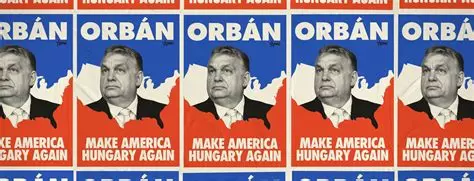
The breath of democracy: what Viktor Orbán’s defeat tells us about democracy in Europe
Clearly, on Sunday 12 April 2026, when Viktor Orbán conceded defeat at the polls, it was first and foremost a huge relief – for Hungarians, of course, but also for all democrats: contrary to fears, speculation, or the examples set by his patrons from Washington to Moscow, the strongman of Budapest accepted the change of government and did not seek to contest the results or question the integrity of the vote. In today’s Europe, this gesture is by no means insignificant, for if there is one thing that characterises authoritarian regimes, it is their reluctance to hand over the keys to the house. Even if it means fomenting a revolt or amending constitutional laws as they see fit. But not this time.
Beyond Budapest, the whole of Europe is finally breathing a sigh of relief. For years, Viktor Orbán had made opposition to Brussels – denounced as a new Moscow – one of the cornerstones of his nationalist rhetoric, presenting his resistance to the ‘woke’ ideology of the European institutions as a Kulturkampf for the very heart of European civilisation. Little by little, this dissent within the EU and its ideological alignment with Putin’s Russia had transformed Hungary into a Trojan horse for the influence of foreign powers competing with, or even at war with, the European Union. With him, and his foreign minister acting as Moscow’s errand boy, it was Xi, Putin, and even Trump who had their seats on the European Council. To see this stranglehold recede, even by a single step, is already to reclaim a little European sovereignty.
Finally, it is also a relief for an opposition which, since 2014, had regularly failed to articulate a credible vision. Since 2014, all attempts at coalition or unification behind an alternative figure had foundered on squabbles, leadership rivalries or sheer activist fatigue. Opposing without ever winning eventually wears down even the very idea of an alternative. This time, the cycle of resignation has been broken: power is no longer invincible, and a change of government is no longer a fiction. That alone is worth a breath of fresh air for Hungarian society.
But at what cost! It required all the forces of the democratic, social, liberal and environmentalist left to agree not to be represented in the new parliament. By refraining from fielding candidates, this section of the opposition demonstrated incredible political maturity and an equally exceptional faith in the electorate’s democratic aspirations.
That is why relief must not give way to complacency. Orbán’s defeat is not the result of a single moral surge or a sudden democratic awakening among the Hungarian people. Voters are no more or less democratic today than they were when they handed Orbán majorities and triumphs in 2014, 2018 and 2022. What has changed is this spectacular and magnificent sacrifice by the opposition. And the tangible reality of the economic crisis: record inflation, stagnant wages, the exodus of young people and the deterioration of public services. The 2026 vote is also a vote of the wallet, not just of values. When corruption and breaches of democracy were no longer offset by the material comforts of sluggish growth and an economy plundered by the ruling power and its oligarchs.
This is what European democrats must reflect upon. Whilst they are rightly celebrating, they would be wrong to see this as the end of a cycle. For, although it has just been held back in Budapest, as it was in The Hague last autumn, the momentum of the far right has by no means disappeared. Since 2017, every setback has been followed by a more vigorous resurgence. In Portugal last February, it reached the second round of the presidential election; in Denmark on 24 March, it regained ground; in Germany, the regional elections in Saxony-Anhalt this September could see it triumph on its own. In Poland, it is already threatening to return next year. And in France, everyone fears its victory next spring.
With or without its Hungarian patron, the crux of the problem remains: as long as European politics is reduced to technical management, as long as it leaves entire swathes of marginalised people by the wayside, and as long as it responds with statistics to people who are seeking meaning, it will leave the field open to those who claim to embody ‘common sense’ and the interests of the people. The victory over Orbán reminds us that the answer to illiberalism cannot be simply to wait for a favourable electoral response – after 16 years of resignation and the voluntary sacrifice of political pluralism. It must be built on people’s lived experiences, on respect for dignity, and on a renewed vision that transcends fears, unites hopes and offers a collective vision.
If we are now facing a triumphant far right across Europe, it is because democrats have failed to respond to growing anger and frustration and have neglected the populist uprising of recent decades.
Hungary may be waking up today from a long nightmare. But for European democrats, now is the time to learn to dream again — lucidly.